Bridging the Gap

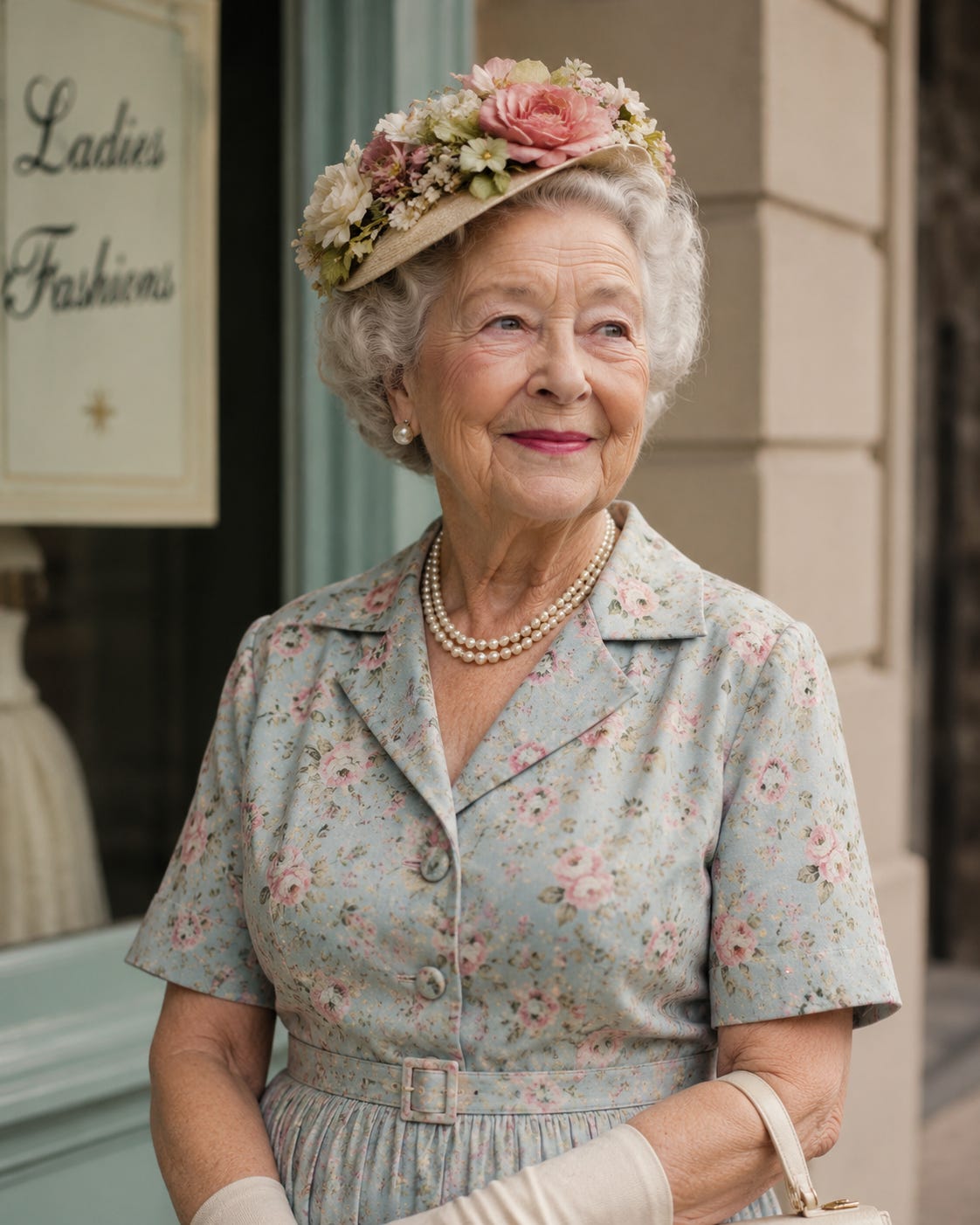
What do you think of when you think of the card game bridge? I suspect most people’s minds move to blue-haired old ladies with floral fascinators or crotchety old men whose burgeoning ear hairs need tending, like dandelions in a garden.
And with good reason: the average age of bridge players today is 69.55. Yet, as with so many life choices, seems I’m the exception to that rule.
Yes, I currently qualify as an old lady–okay, fine, a “senior.” But I’ve dreamt about playing bridge since my early teens, when I took an “easy” high school credit course with my friend Babe (not her real name, obvi) to learn the game.
We spent our semester staring at cards with Mrs. Leduc, the gym teacher, who also doubled as the bridge teacher, learning about bidding, trump, and logical thought processes. We got our “easy” B+ grades (I was kinda bummed, to be honest, since it ruined my A streak), then promptly forgot all about it and moved on.
Fifty years later, I was determined to re-learn the game. Why? I’m not quite sure, to be honest. I must have held on to some sense that the game had been fun, and was challenging, and that I’d enjoyed it. Plus, it’s a great way to meet new people, something I’m also determined to do post-Covid, now that too many of us remain sequestered on the couch at home most of the time.
From the first lesson, I discovered I’d retained exactly nothing from the high school experience (well, except the knowledge that Mrs. Leduc was a really hard marker). But I believed my subconscious would help me ease back into it quickly–sort of like riding a bike.
I couldn’t have been more wrong.
Meg Jenson on Unsplash
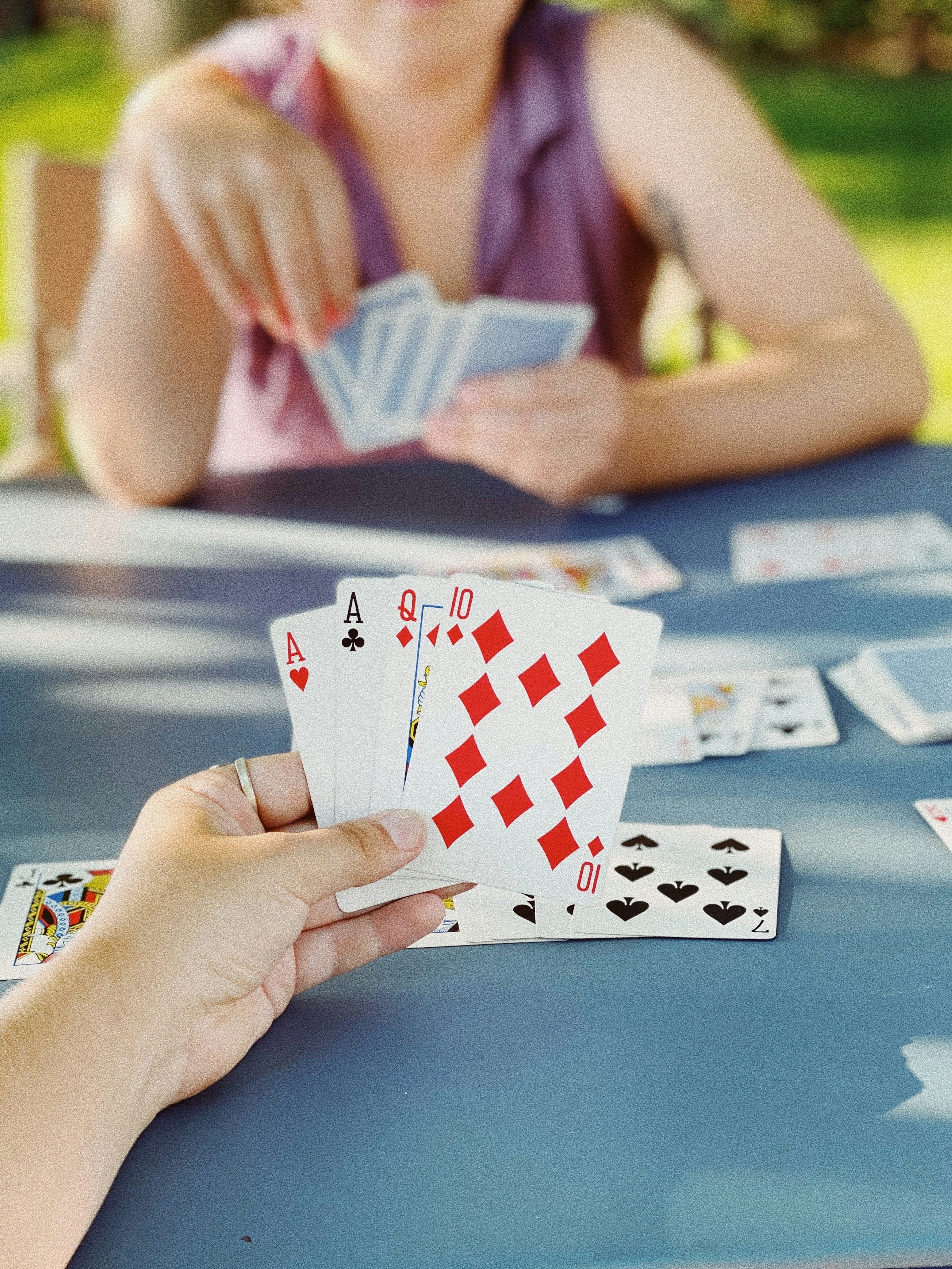
Post-lesson, I returned home eager to review my notes and commit the initial rules to memory. Aces are worth four points. Kings worth three, Queens worth two, Jacks worth but one. The order of suits, from most valuable to least, is spades, hearts, diamonds, clubs (easy to remember since it’s in reverse alphabetical order!). Trump beats all (I will ignore the opportunity for endless puns or snarky jokes on this one).
As I sat memorizing, my mind wandered: wait, wouldn’t it make more sense for aces to be one point, since the actual number on the card is “one”? Why are spades the most powerful suit? Because we can dig trenches or build foundations with spades in real life? But then what about diamonds, which are more valuable in real life? And hey–the names are in reverse alphabetical order! And you sort of have to reverse-engineer how to win your tricks. Why are they called tricks, anyway. . . . ?
And so on.
Yep, I thought, this is going to be a blast! Easy peasy.
And then the following week, we embarked on Lesson Two: Opening Bids.
So much of it didn’t make sense. I mean, if you have some really good clubs, but not as great spades, you’re supposed to bid spades? Why do you need more tricks to win with No Trump? And why does the winning number of tricks always assume a starting point of six wins, then add on to that? Why not just say the total number of tricks you need to win?
Already, my head was spinning.
The upshot is that, no matter how much I practiced at home, when I returned to the lessons, I’d forgotten most of what I’d learned the previous week. I was horrified at how feeble my memory had become, unable to retain the play in my head (Did he already play the ace of hearts? How many points did we have?--and so on) and how the rules seemed to leave my mind almost as soon as I learned them, like sugar through a sieve.
And this game is supposed to be for OLD people?!

Yet while the experience has been very humbling, I’ve also noticed something intriguing going on. Ever since I started these lessons, my mind has been awash with new ideas for writing projects, from short stories to personal narrative to a new slant on my memoir. I conceived of a completely new way to approach my book coaching business that will help SO many more writers complete their books. I’ve even been more productive with editing tasks.
Coincidence? I think not.
As it turns out, learning something new sparks creativity.
Despite being frustrated that my brain won’t remember as easily as I’d like it to or that I can’t seem to hold the rules in mind while also strategizing for the game, the mere act of attempting to learn bridge is making my mind work in new ways and forge new connections. In other words, my brain’s neuroplasticity is laying down new neural pathways, thereby increasing my mental capacity–and my creativity.
How does this enhancement come about? Learning a new skill allows original connections in your brain between otherwise disparate concepts. Neural pathways link together parts of the brain that might not click simultaneously in other contexts, leading to novel ideas. You might see connections between something you discussed in yoga class and a recent deduction your accountant pointed out. Or maybe you’re hit with the similarity between the plot in the latest Ann Patchett novel and something in the self-help book you’re consuming.
This process of linking seemingly unrelated ideas is how groundbreaking discoveries are made: it’s how Sir Isaac Newton conceived of gravity after seeing an apple fall from a tree, how Archimedes discovered displacement in the bathtub, or how Watson envisioned DNA’s double helix structure after viewing an X-Ray image.
For me, the joy of tapping into my creativity far surpasses the frustration of slow and incremental learning. I can almost feel those pathways being laid down in that cerebrum. I can sense little sparks of electricity coursing through those new neural links. And I cherish the creative output that comes as a result of all that effort. It also reminds me that, at any age, we’re still capable of learning new things.
Despite the mental challenges, I really am enjoying bridge. The people are lovely, the game is fun, and the unexpected boost to my writing output is appreciated.
All that’s left now is to memorize those rules (well, and maybe buy a floral fascinator . . . ).

********************
As always, thank you for reading. If you enjoyed this article, please share it with someone else! Or consider supporting me and my writing by subscribing with a paid or free subscription or a one-time donation (see button below). I’ll be eternally grateful in any case!
*******************